September is National Cholesterol Education Month. Learn something about your cholesterol and what you can do to lower yours.
September is National Rice Month. There are more than 40,000 varieties of rice - expand your palate.
September 1 - National Cherry Popover Day
September 2 - National Blueberry Popsicle Day. Although I do not know if I have ever actually seen a blueberry popsicle, make that your quest today and celebrate!
September 7, 1840 - Luther Crowell, inventor the machine that makes square bottomed grocery bags was born.
September 8 to 9 - Chile Pepper Food Festival in Bowers, Pennsylvania. It is the largest chile pepper festival in the United States.
September 13, 1857 - Milton Snaveley Hershey was born. He invented the formula for making chocolate bars and founded the Hershey Chocolate Company. Celebrate my indulging a good piece of chocolate!
September 16, 1947 - Reynolds Metals sells the first aluminum foil calling it Reynolds Wrap. Can you imagine life without it?!
September 20, 1995 - Orville Redenbacher, 88, died by drowning in his hottub after suffering from a heart attack. It really was Orville in the television ads.
September 21 to 24 - World Chicken Festival in London, Kentucky. This festival celebrates the home of Colonel Sanders and the original Kentucky Fried Chicken restaurant, established in the 1940's.
September 28 - National Strawberry Cream Pie Day
September 29 - St. Michael's Day, patron of grocers and bakers. It is also called Goose Day, saying If you eat goose today, you will never want money all the year round.
September 28 to 30 - Great American Beer Festival in Denver, Colorado.
These food facts from http://foodreference.com/
Sunday, August 27, 2006


Friday, August 18, 2006
It's So Cheesy
Several weeks ago I spent a gorgeous Saturday afternoon at my grandparents' farm. My grandmother (amazing woman if I you have not met her or heard about her, but that is a another topic) had a stack of old cooking pamphlets, most circa 1950's. Among them was a fantastic little gem about, in my opinion, the most versatile and yummy food item -- cream cheese. The book was titled "Philly" Dip Party Handbook and you will be shocked to find out, it is full of dip recipes all based on cream cheese!
The recipes are all aptly named - Avocado Dip is cream cheese and mashed avocado, Cucumber Dip is cream cheese and grated cucumber. Most recipes have a couple dashes of Worcestershire sauce.
I find the most intriguing recipe to be:
Philly Hostess Dip
1 8-oz pkg. Philadelphia Brand Cream Cheese
3 tablespoons milk
2 teaspoons lemon juice
1 teaspoon Worcestershire sauce
1 tablespoon Kraft Mayonnaise
1 teaspoon Kraft Mustard with added Horseradish
¾ teaspoon garlic salt
½ teaspoon paprika
Combine the cream cheese and milk, blending until smooth. Add the lemon juice, Worcestershire sauce, mayonnaise, mustard, garlic salt and paprika, and mix well. Serve with corn chips.
Although I may do a few things differently such as, I would substitute sour cream for the milk. The mustard with horseradish is similar to Dijon, so I would add Dijon instead of yellow mustard and may add more horseradish at the end if I thought it needed it. I would substitute a little fresh garlic for the garlic salt (I do not think it would need any more salt with the Worcestershire sauce). I may add some white pepper and garnish with sliced green onions.
According to Kraft, “Cream cheese originated in the United States in 1872 when a dairyman in Chester, New York, developed a 'richer cheese than ever before,' made from cream as well as whole milk. Then in 1880, a New York cheese distributor, A. L. Reynolds, first began distributing cream cheese wrapped in tin-foil wrappers, calling it Philadelphia Brand. The name 'Philadelphia Brand cream cheese' was adopted by Reynolds for the product because at that time, top-quality food products often originated in or were associated with the city, and were often referred to as being ‘Philadelphia quality’.”
And the reason for the blue piece of material inside the package, “We put the blue strip of material inside our 3oz packages of Kraft PHILADELPHIA Cream Cheese and Kraft PHILADELPHIA FREE Cream Cheese to help form and wrap the packages at high speeds.”
Some friends and I recently had an interesting debate about cream cheese. It is a versatile ingredient used for breakfast, lunch, dinner and even dessert. We were looking for the food item you would not want to have cream cheese with. Someone suggested pickles, but according to my new Party Handbook, The Philly Dill Dip was pickle juice and chopped pickles so that is out. I would be interested to hear what food item you do not think cream cheese would accompany.
Bon appétit!
“Philly” dips can be simple or elegant, depending on the flavor and serving dishes you prefer. We hope these suggestions will add the variety and originality that make your parties truly festive occasions.In an effort to find out when the book was published, I went online for some research. Unfortunately that was a dead end, several posts about the book but none had a date. I did find that you too could own this book for prices ranging from $1.99 to $22.50. I contacted Kraft food company to find out more information and am still waiting to hear back.
The recipes are all aptly named - Avocado Dip is cream cheese and mashed avocado, Cucumber Dip is cream cheese and grated cucumber. Most recipes have a couple dashes of Worcestershire sauce.
I find the most intriguing recipe to be:
Philly Hostess Dip
1 8-oz pkg. Philadelphia Brand Cream Cheese
3 tablespoons milk
2 teaspoons lemon juice
1 teaspoon Worcestershire sauce
1 tablespoon Kraft Mayonnaise
1 teaspoon Kraft Mustard with added Horseradish
¾ teaspoon garlic salt
½ teaspoon paprika
Combine the cream cheese and milk, blending until smooth. Add the lemon juice, Worcestershire sauce, mayonnaise, mustard, garlic salt and paprika, and mix well. Serve with corn chips.
Although I may do a few things differently such as, I would substitute sour cream for the milk. The mustard with horseradish is similar to Dijon, so I would add Dijon instead of yellow mustard and may add more horseradish at the end if I thought it needed it. I would substitute a little fresh garlic for the garlic salt (I do not think it would need any more salt with the Worcestershire sauce). I may add some white pepper and garnish with sliced green onions.
According to Kraft, “Cream cheese originated in the United States in 1872 when a dairyman in Chester, New York, developed a 'richer cheese than ever before,' made from cream as well as whole milk. Then in 1880, a New York cheese distributor, A. L. Reynolds, first began distributing cream cheese wrapped in tin-foil wrappers, calling it Philadelphia Brand. The name 'Philadelphia Brand cream cheese' was adopted by Reynolds for the product because at that time, top-quality food products often originated in or were associated with the city, and were often referred to as being ‘Philadelphia quality’.”
And the reason for the blue piece of material inside the package, “We put the blue strip of material inside our 3oz packages of Kraft PHILADELPHIA Cream Cheese and Kraft PHILADELPHIA FREE Cream Cheese to help form and wrap the packages at high speeds.”
Some friends and I recently had an interesting debate about cream cheese. It is a versatile ingredient used for breakfast, lunch, dinner and even dessert. We were looking for the food item you would not want to have cream cheese with. Someone suggested pickles, but according to my new Party Handbook, The Philly Dill Dip was pickle juice and chopped pickles so that is out. I would be interested to hear what food item you do not think cream cheese would accompany.
Bon appétit!
Tuesday, July 25, 2006
Fresh Herbs
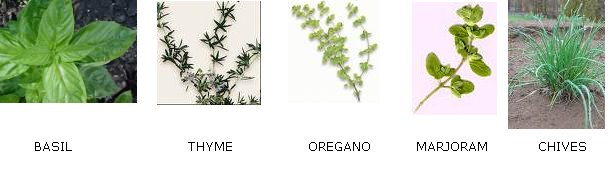
Late summer is harvest time for fresh herbs. The smell of fresh herbs can be intoxicating. Home grown herbs have a more pungent flavor and are readily available when cooking ~ just step out the door and pick what you need. Most herbs grow well in Michigan. Potted plants make herbs available to us year round.
* Examples of annual herbs are parsley, basil, marjoram, dill.
* Examples of perennials herbs are chives, thyme, oregano, rosemary, mint, sage (Note from experience: some of these can overtake your garden so watch carefully).
Whether you are ambitiously starting your plants from seeds or buying a gorgeous mature plant in the produce section of your market, take a little time to see what conditions your herb prefers. Most enjoy full sun with regular watering but best to learn so your plant will stay with you for a while.
Fresh herbs are best used at the end of the cooking process. Heat will destroy their delicate flavor, so I like to sprinkle them on my plate instead of in the dish itself. When substituting fresh for dried the ratio is
3 parts fresh herbs : 1 part dried herbs
If you have an abundance of fresh herbs, you can either dry them or freeze them. In either case, make sure you start with clean, patted dry herbs. There are several ways to do both; I am just including one method:
DRYING HERBS: Place whole herb leaves in a single layer on a baking sheet. Place oven on the lowest setting and place herbs in with the door ajar until they have dried. Crush or leave whole and place in an airtight container. Dried herbs are good to use for up to six months.
FREEZING HERBS: Chop herbs and place a specific amount (i.e. 1 tablespoon) in an empty ice cube compartment. Once the tray is filled, fill each compartment with boiling water. The water will blanch the herbs, helping them retain their flavor. Once the water has cooled, place tray in freezer. Once cubes frozen, remove and place in an airtight container, like a freezer bag. Frozen herbs will lose their vibrant color. Now you have premeasured quantities that you can drop in to soups and sauces at the end of the cooking. Just heat long enough to melt the water. If you are concerned about the extra water in your dish, you can melt on a paper towel before adding to your dish. Frozen herbs are good to use for up to four months.
Here are some good on-line herb resources:
Food Network's Guide to Herbs & Spices - Photos, general information, recipe links
Herb Recipes and Cooking Info - Articles and general information about herbs, herb substitutions, recipe links
FreshHerbs.com - Historical and general information, nutritional information, recipes, hints and tips
Herbs offer natural cures for some common ailments, learn more at:
Thursday, July 20, 2006
Do you have a zest for fruit?
 Nothing says summer to me quite like the fruity tang of citrus! How do we incorporate this lively flavor into our dishes? There are two methods: either juice the fruit or use its zest.
According to the The Food Lover's Companion, zest is "the perfumy outermost skin layer of citrus fruit (usually oranges or lemons)...". It is used to season many types of dishes from savory to sweet. When zesting a fruit, it is important to only remove the vibrantly colored outer layer. Just below this layer is the white, soft layer called pith. Pith has a bitter taste so be careful to not remove it with the zest.
How do we remove the zest without removing the pith, you ask? Luckily several tools do the job quite well. I have included photos of the three most common kitchen gadgets used for completing this task.
With all three of these tools the key is not going too deep.
The lemon zester: This tool has tiny holes at the end of it to cut thread-like strips of zest. If a smaller sized zest is required, simply chop to desired size.
The microplane zester: This gives you a fine, grated zest. By using the smallest holes on a box grater, you can achieve similar results.
The vegetable peeler: Probably the most common kitchen tool of the three, the peeler will give you ribbon-like bands of zest which can be used whole, cut into strips or minced.
Now we have zest, what should we do with it?
- You can add zest to any recipe that calls for lemon, lime or orange juice to add more flavor to the dish.
- Sprinkle two types of zest with a mix of freshly chopped herbs on top of your favorite piece of fish. Cover and bake in a 400° F oven. A general rule is 10 minutes for every inch of thickness.
- Make a crust to add to meat. Mix zest with salt, pepper, garlic and experiment with different herbs, nuts and seeds. Try orange-rosemary, lime-cumin, lemon-pine nut, orange-sesame seed or lemon-basil. Rub the mix over a chicken breast, steak or pork chop and pan sear until brown. Depending on the size of the meat you can finish in the pan or bake in a 350° F oven until done. Use a meat thermometer to make sure the meat is properly cooked.
Bon appétit!
Monday, July 10, 2006
Keeping Your Cool!
Although we are having a relatively cool Michigan summer, I thought you might enjoy some tips for keeping things cool when the kitchen heats up.
- Match pot to burner size so extra heat isn't escaping into the air. Covering pots will help also (and bring water to a boil faster).
- When finished using a burner, put a teakettle or pot of water on the burner to absorb the heat not dissipate the heat into the air.
- Instead of turning on the oven, use your toaster oven to cook single or double servings of your favorite entrées.
Of course, recipes with no cooking involved seem the most practical solution. Some ideas: wrap sandwiches with deli meats and cheeses; summer salads with canned fish or meats, or precooked, purchased meats (like rotisserie chicken); or there is always take-out.
Grilling is an easy option with no indoor cooking. Try using a purchased marinade for your fishes and meats. I like the Mrs. Dash 10-Minute Marinade Line for sodium free alternatives (visit the site for a $2 off coupon). Whatever brand you prefer, be sure to read the Nutritional Information to find out exactly what you are getting in your marinade. You can also grill your sides. Some favorites of mine are making hobo packs on the grill. A hobo pack is a foil pouch that holds your vegetables, sometimes meats, herbs and spices. By adding a liquid such as white wine or a fat such as butter or olive oil, the veggies steam and roast for a great summertime side dish. Experiment with potatoes, mushrooms, eggplant, tomatoes, corn, asparagus and onions. Cooking time will depend on the vegetables you choose.
If you aren't in the mood for grilling, make a quick pesto and throw in cooked pasta. Pesto is great because it requires no cooking.
Another easy option is a cold soup like gazpacho or cucumber-melon soup.
What ever you decide - stay cool and bon appétit!
Monday, July 03, 2006
July is National Blueberry Month

Blueberries are a great source of fiber and vitamin C while being low is sodium and calories. In a recent study of 60 fruits and vegetables, blueberries were ranked with the highest antioxidant properties (ability to destroy free radicals). They are a great brain food, increasing memory and improving learning. They help promote urinary tract health as well as cranberries. And blueberries improve vision.
Blueberries are grown on bushes and native to North America, grown in the wooded and mountainous regions. There are about 30 different species of blueberries. They have only been commercially cultivated within the last hundred years. Now over 200 million pounds are cultivated annually.
When buying blueberries in the market, look for firm, plump berries. They should be dry (to prevent molding) and relatively free of stems and leaves. Old berries will start to look winkled and shriveled. Store them covered in the refrigerator for up to 10 days and only wash them just prior to use.
Michigan hosts at least four blueberries festivals. August 4 - 5, Imlay City hosts the Blueberry Festival. August 10 - 13, South Haven hosts the National Blueberry Festival. August 16 - 20, Montrose hosts the Montrose Blueberry Festival. August 18 - 20, Paradise hosts the Wild Blueberry Festival.
When thinking of blueberries in food, I am sure blueberry muffins, blueberry pancakes and blueberry jam come to mind. But how about trying these:
Grilled Chicken with Tangy Blueberry Sauce
Warm Blueberry and Mango Compote served over a nice salmon or tuna filet
Or try substituting dried blueberries for either dried cranberries or dried cherries in your favorite recipe.
Let me know if you try the above recipes, I would be interested to hear what you think.
Welcome
Welcome to the inaugural post of Chef Jen's blog. At this time, I'm not sure what I will be posting about. I will be giving tips and tricks for making good food easy. I am hoping to post some photos of the food I prepare. And I will be exploring the diversity of cream cheese. I am also going to looking for great food websites to share with you - so watch the links.
If you have any suggestions, topics you would like to see or specific questions you would like to have answered, please email me and I will do my best to get you answers.
jen@prestochef.com
If you have any suggestions, topics you would like to see or specific questions you would like to have answered, please email me and I will do my best to get you answers.
jen@prestochef.com
Subscribe to:
Posts (Atom)